
Best Paper Award
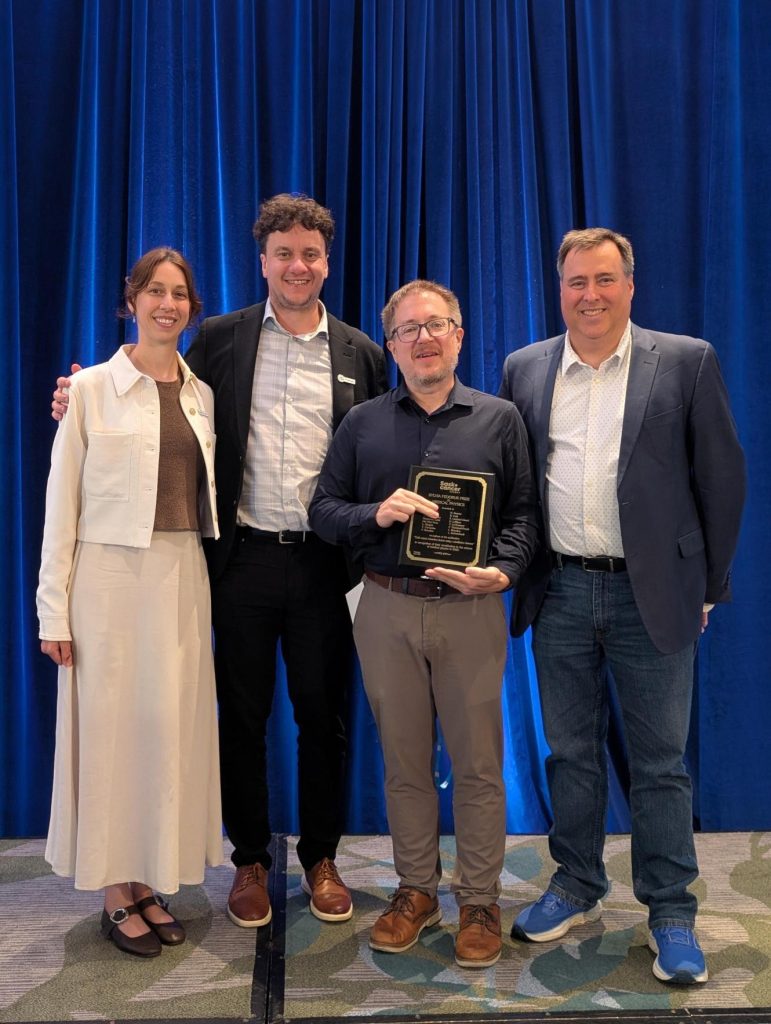
At the 2026 Joint AAPM | COMP Meeting in Vancouver, the Canadian Organization of Medical Physicists gave its 2026 Sylvia Fedoruk Best Paper Award to Professor Louis Archambault et al. for the excellence of their scientific paper: “Field Output Correction Factors Using a Scintillation Detector“, a study written by eleven authors from Québec – Canada institutions.
When detector’s design directly influences the measurements
Small-field dosimetry is uniquely challenging because the detector does not simply observe the radiation field, it also changes it. Its sensitive volume averages the dose across extremely steep gradients, while any deviation from water equivalence perturbs the particle fluence and alters the measured signal. For this reason, the international code of practice, IAEA/AAPM TRS-483, assigns detector-specific correction factors for pre-defined standard measurement conditions, which most clinics obtain from published data rather than determining experimentally on their own systems.
Understanding and quantifying these effects at a deeper level requires expertise that rarely exists within a single organization. It demands detailed knowledge of the detector’s materials and properties, advanced Monte Carlo simulations capable of isolating the different contributors to detector response, and access to clinical beam time for high-quality measurements supported by a rigorous uncertainty analysis.
Small-field accuracy without detector-specific corrections
The author list of this awarded paper reflects the combination of skills needed to tackle a problem where the detector itself becomes part of the measurement challenge.
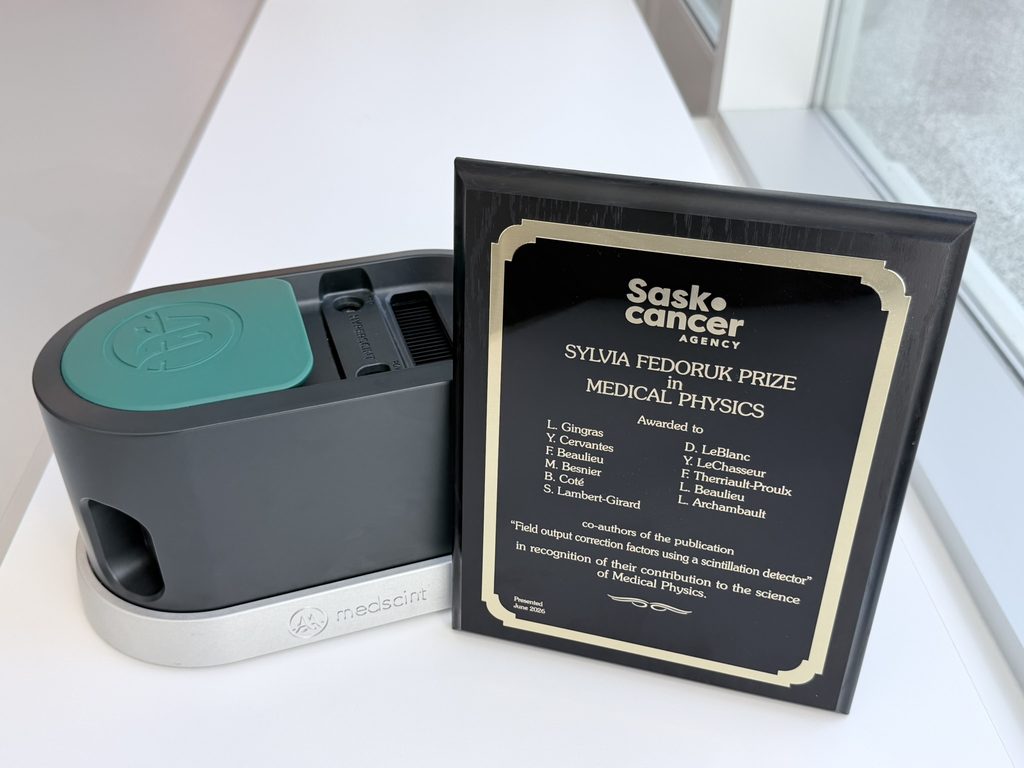
The team characterized the HYPERSCINT plastic scintillation detector across field sizes ranging from 0.6 × 0.6 cm² to 40 × 40 cm². The measured correction factors remained between 0.999 and 1.002, with a total uncertainty of 0.5%, demonstrating an almost water-equivalent response over the entire range.
These results confirm the detector’s ability to perform precise dosimetry in small fields, but also larger conventional fields.

This finding enabled a second outcome. Because HYPERSCINT requires essentially no correction of its own, the team used it as an experimental reference to determine correction factors for two solid-state detectors and three small-volume ionization chambers. Rather than relying solely on published values obtained elsewhere on nominally identical equipment, clinics can use this approach to establish correction factors on the specific detectors used in their own practice.
The institutions behind the paper
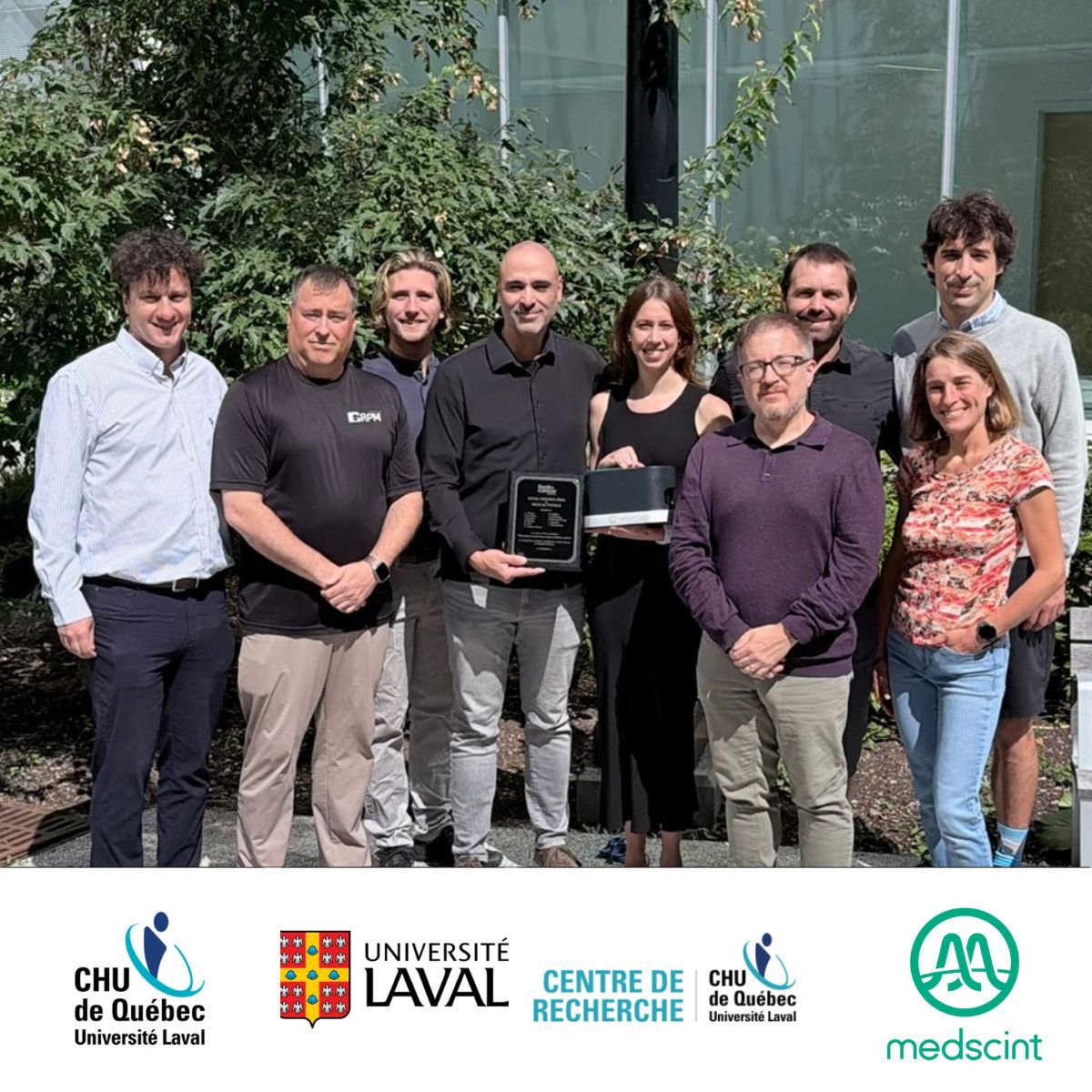
Scientific progress is nothing without the people behind it. This team helped earn the 🏆 Best Paper of the Year Sylvia Fedoruk Award at the Joint AAPM | COMP Annual Meeting for our work on one of the trickiest challenges in modern ⚛️ radiotherapy: accurate 𖦏 small-field dosimetry.
A true collaboration between CHU de Québec, CRCHUQ, Université Laval, and Medscint 💚.


Congratulations to the authors
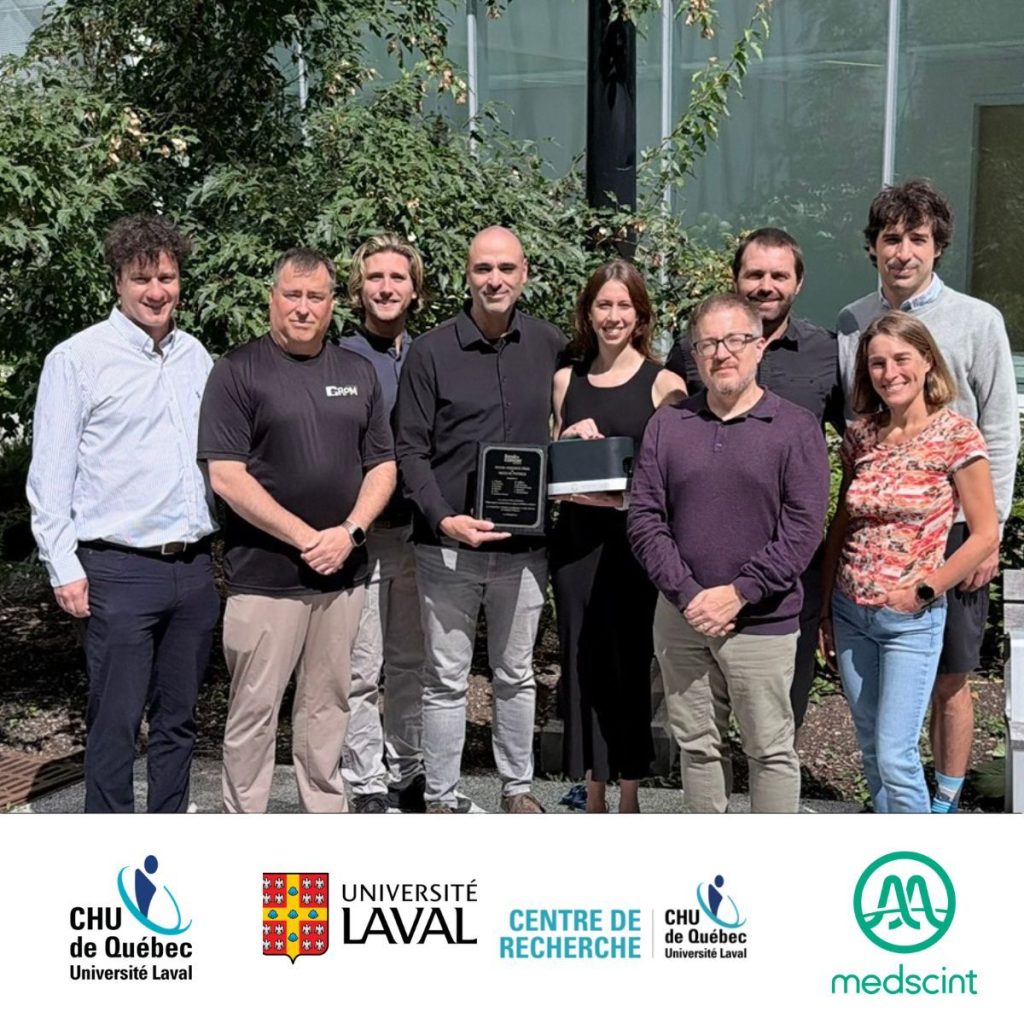
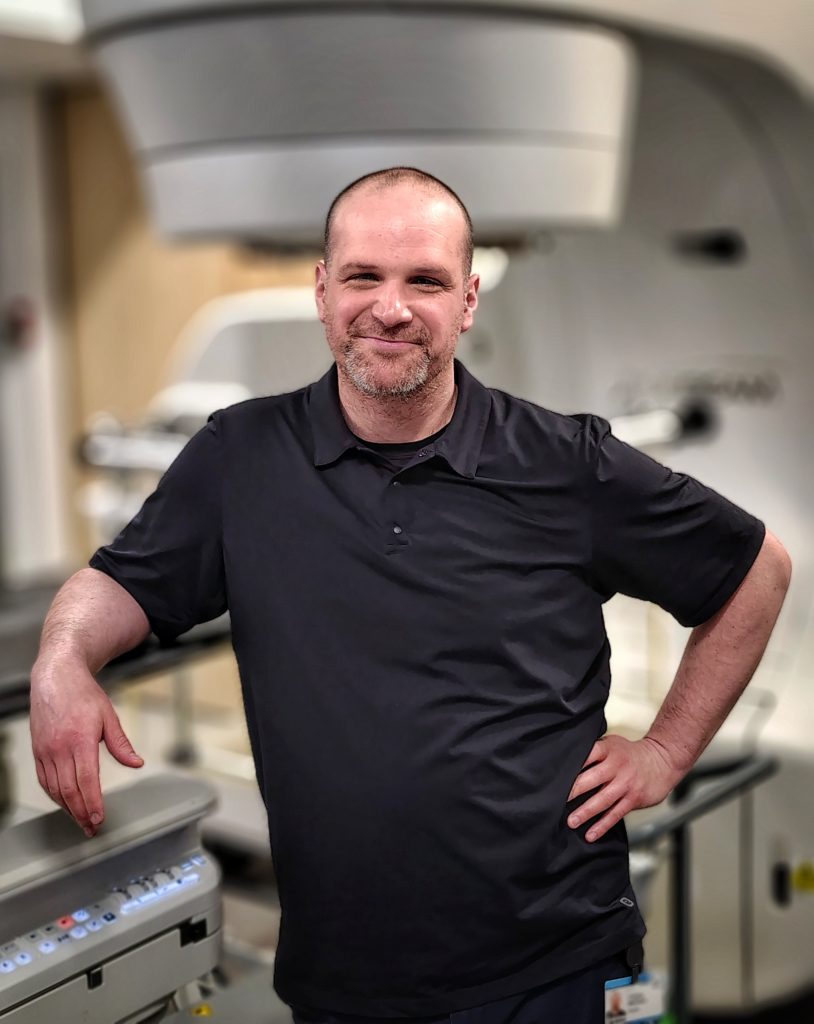

Our congratulations go to all eleven authors: Luc Gingras, Yunuen Cervantes Espinosa, Frédéric Beaulieu, Magali Besnier, Benjamin Côté, Simon Lambert-Girard, Danahé LeBlanc, Yoan LeChasseur, François Therriault-Proulx, Luc Beaulieu, and Louis Archambault.
While the award recognizes a single publication, it reflects years of collaboration between clinicians, researchers, and industry experts working toward a common goal: advancing small-field dosimetry for better radiotherapy cancer treatments. This recognition belongs to everyone who contributed to that effort.